
 25 March 2026 / Wajahat Mehmood l Managing Director at Astrum Global LLC
At first glance, it seems paradoxical. A company reports strong earnings, expanding revenues, and impressive margins—yet struggles to pay suppliers, cover payroll, or fund expansion. This is the silent tension inside many high-growth profitable firms: profitability on paper does not always translate into liquidity in the bank.
A cash crunch can strike even when financial statements look healthy. Investors celebrate rising profits, but internally the finance team scrambles to manage obligations. The disconnect between cash flow vs profit becomes painfully clear when operational demands outpace available funds.
This article explores why profitable companies running out of cash is more common than most executives expect—and how financial leaders can prevent it.
Understanding the difference between profit and cash flow is foundational.
Profit is an accounting measure. It reflects revenue earned minus expenses incurred—regardless of when money actually moves. Cash flow, however, represents the real-time inflow and outflow of money.
This gap explains many cash flow problems in growing organizations.
For example:
Revenue may be recorded today, but payment might arrive 60 or 90 days later.
Inventory purchases require immediate payment.
Payroll must be funded on schedule.
Debt repayments and liquidity obligations demand cash, not profit.
The debate of revenue vs cash flow becomes critical during periods of rapid expansion. While revenue climbs, liquidity can quietly erode.
Growth is capital-intensive. Expansion often requires:
Hiring new staff
Increasing inventory
Expanding facilities
Investing in technology
Funding marketing campaigns
Each of these initiatives consumes cash before producing returns.
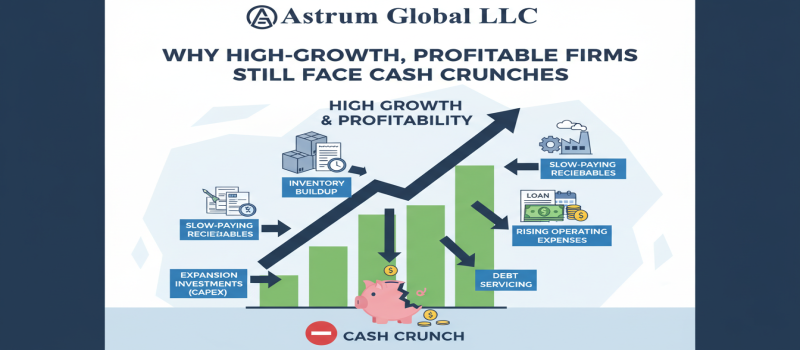
This explains the impact of rapid growth on working capital. When sales increase quickly, accounts receivable grow as well. If customers take time to pay, accounts receivable delays create strain. Meanwhile, suppliers still expect timely payments.
The result? A widening gap in the cash conversion cycle.
High-growth profitable firms frequently encounter growth and cash flow problems because growth itself absorbs liquidity.
Working capital management is the art of balancing short-term assets and liabilities. It determines whether a company can sustain operations without disruption.
Key components include:
Accounts receivable
Accounts payable
Inventory
Short-term debt
Inventory management and cash flow are deeply intertwined. Excess inventory ties up funds. Insufficient inventory can hurt revenue. Misalignment creates cash shortage in business operations.
Many CFO perspective on cash flow discussions focus heavily on optimizing working capital. Even minor improvements in receivable collection periods can unlock substantial liquidity.
There are several structural causes behind profitable companies running out of cash:
Revenue recognition does not guarantee immediate payment. Extended credit terms slow inflows while expenses remain immediate.
Managing rapid business growth without forecasting liquidity needs can overwhelm reserves.
Purchasing equipment or property may not affect profit immediately due to depreciation accounting—but the cash leaves instantly.
Loan principal payments reduce cash yet do not appear as expenses on the income statement.
As companies scale, operational expenses and cash commitments rise sharply. Without careful oversight, burn rate can exceed incoming funds.
These are the fundamental reasons businesses run out of cash despite profit.
Operating cash flow issues often stem from expansion cycles. When companies increase production, inventory builds. When sales expand, receivables accumulate. If customer payment terms are extended, liquidity compresses.
This pattern explains why profitable businesses run out of cash even when margins look healthy.
High growth compresses liquidity faster than many leaders anticipate.
The most resilient organizations implement disciplined financial management strategies.
Rolling 13-week forecasts provide real-time visibility. Long-term projections allow proactive decision-making.
Financial forecasting must become a living process—not a static annual exercise.
Reducing receivable days, negotiating better supplier terms, and managing inventory turnover directly improve liquidity.
Maintaining adequate reserves cushions temporary shortfalls.
Expansion plans must be stress-tested against cash flow challenges, not just profitability projections.
These CFO strategies for managing cash flow distinguish sustainable expansion from reckless scaling.
Many founders prioritize profitability metrics. Yet experienced CFOs emphasize liquidity first.
The difference between profit and cash flow becomes particularly significant during volatile economic cycles. Economic slowdowns magnify business liquidity issues. Delayed payments increase risk exposure.
A disciplined CFO perspective on cash flow requires asking:
Can we meet obligations for the next 90 days?
What happens if receivables slow?
How resilient is our working capital structure?
Profit is important. Cash is survival.
How to prevent cash crunch in growing business environments?
It requires strategic control over:
Receivable collection systems
Inventory turnover
Cost management
Capital investment timing
Debt structuring
Companies that integrate financial management strategies into operational planning avoid sudden cash shocks.
Strong governance transforms growth from chaotic expansion into controlled scaling.
Professional advisory firms play a critical role in helping organizations navigate cash flow challenges.
Astrum Global works with businesses to build sustainable liquidity models while supporting expansion initiatives. Through expert advisory and financial oversight, companies gain clarity on managing rapid business growth without compromising stability.
Astrum Global provides comprehensive support including tax consultant usa, accounting services in usa, and strategic financial advisory to ensure businesses align profitability with liquidity.
Their service portfolio includes:
Top accounting firms in usa
Tax accountant in new york
Tax accountants in new york
Chicago accounting & tax services
Professional bookkeeping services usa
USA bookkeeping services
By integrating these services into a cohesive framework, Astrum Global helps firms reduce operating cash flow issues, strengthen working capital management, and implement robust financial forecasting systems.
For high-growth profitable firms, having structured oversight through professional financial experts can mean the difference between sustainable expansion and disruptive cash crises.
